
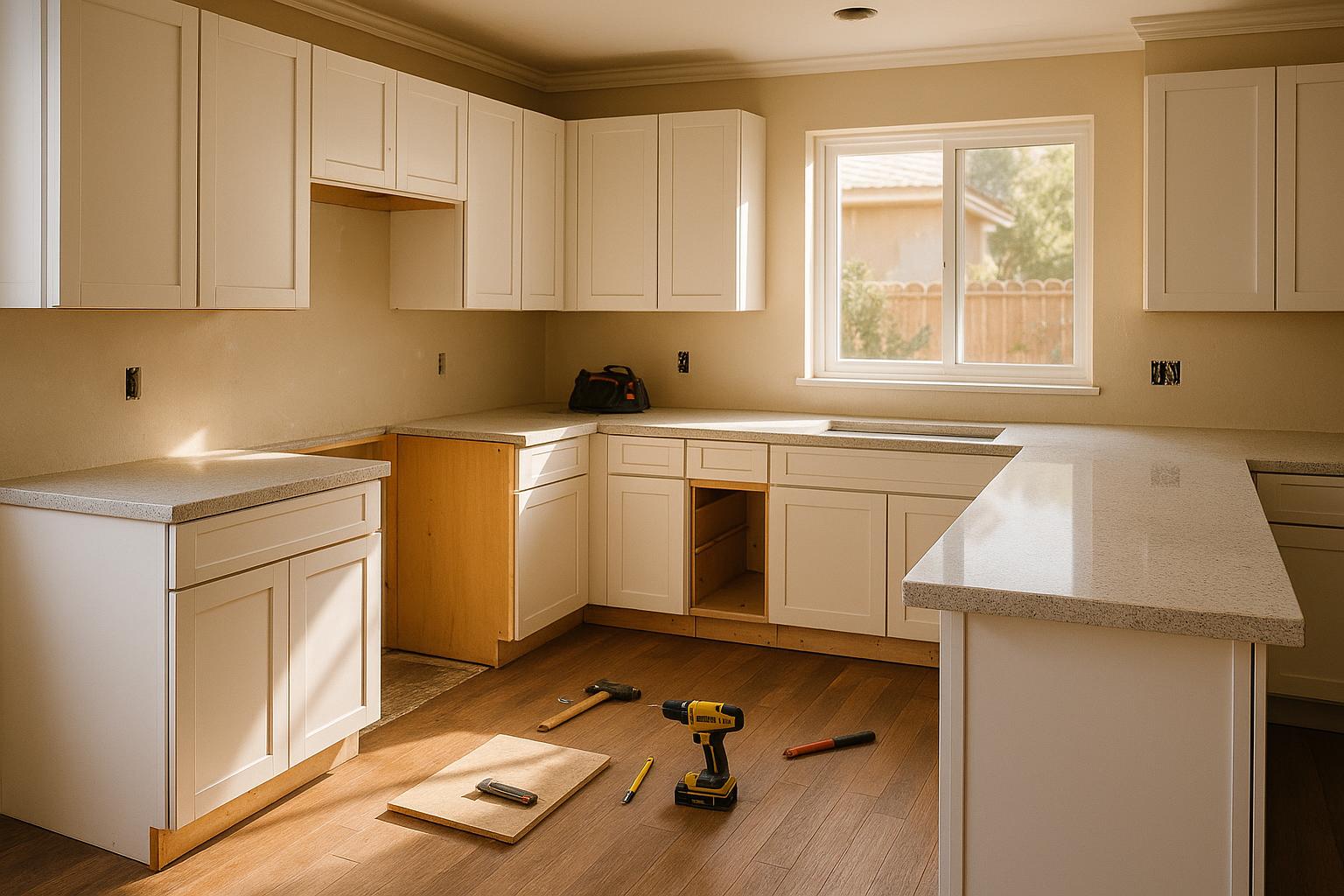
The Question Every Homeowner Asks First
You've been dreaming about a new kitchen for months — maybe years. You've scrolled through countless inspiration photos, picked out cabinet styles, and debated countertop materials with your partner more times than you can count. But before you commit, there's one question that keeps coming up: how long is this actually going to take?
It's a fair question, and honestly, the answer you'll find online is often vague. "Six to twelve weeks" is the standard range most contractors throw out. But what does that really mean for your daily life? When can you cook dinner in your own kitchen again? And what factors could push that timeline longer?
As a remodeling company based in Chula Vista, we've walked dozens of homeowners through kitchen renovations — and we believe you deserve a straightforward, realistic answer. Here's what a kitchen remodel timeline actually looks like, broken down phase by phase.
Phase 1: Design and Planning (2–4 Weeks)
Before anyone picks up a hammer, there's critical groundwork to lay. This phase includes:
- Initial consultation and measurements — Your contractor visits your home, takes detailed measurements, and discusses your goals, budget, and must-haves.
- Design development — Whether you're reconfiguring the layout or keeping the same footprint, a design plan needs to be drawn up and approved.
- Material selections — Cabinets, countertops, backsplash, flooring, fixtures, appliances. Every choice needs to be made before work begins, because mid-project changes are the number one cause of delays.
- Permits — If your remodel involves electrical, plumbing, or structural changes, permits are required in Chula Vista. Your contractor should handle this, but the permitting process can take one to two weeks depending on the scope.
This phase doesn't feel as exciting as demolition day, but it's the most important. A well-planned kitchen remodel runs smoother, costs less, and finishes faster than one that's rushed into.
Phase 2: Demolition (2–5 Days)
This is the part that feels like real progress — and it happens fast. Old cabinets come out, countertops are removed, flooring gets pulled up, and outdated fixtures are disconnected. For a full kitchen gut, demolition typically takes two to five days.
A few things to keep in mind during demo:
- You'll need to set up a temporary kitchen somewhere else in your home. A folding table, microwave, coffee maker, and a cooler can go a long way.
- Dust and noise are unavoidable. If you work from home, plan accordingly.
- This is when surprises can appear — hidden water damage, outdated wiring, or plumbing that doesn't meet current code. A good contractor will communicate these findings immediately and explain your options.
Phase 3: Rough-In Work (1–2 Weeks)
Once the space is stripped down, the behind-the-walls work begins. This includes:
- Electrical — Adding circuits, relocating outlets, installing recessed lighting.
- Plumbing — Moving or adding water lines, relocating the sink or dishwasher, upgrading drain lines.
- Framing — If walls are being moved, added, or removed, structural framing happens here.
- HVAC adjustments — Rerouting ductwork if the layout has changed.
This phase requires inspections before the walls can be closed up. In our experience working in Chula Vista and surrounding areas like Bonita and Eastlake, inspections are generally scheduled within a few business days, but it's smart to build in a small buffer.
Phase 4: Drywall and Interior Finishing (1 Week)
With rough-in work inspected and approved, drywall goes up. It needs to be hung, taped, mudded, sanded, and primed — a process that involves drying time between coats. This phase typically takes about a week.
If your kitchen remodel includes new interior finishing details like crown molding, wainscoting, or built-in shelving, that work happens here too.
Phase 5: Cabinets and Countertops (1–2 Weeks)
Cabinet installation is one of the most transformative moments in a kitchen remodel. You'll finally start to see the space take shape. Cabinet installation itself usually takes three to five days for a standard kitchen.
Countertops come after cabinets are set, and here's where lead times matter. Natural stone and quartz countertops often have a two- to three-week fabrication period after final measurements are taken (which can only happen once cabinets are installed). This is one of the biggest reasons kitchen remodels take longer than homeowners expect.
The takeaway? Choose your countertop material early in the planning phase and ask your contractor about lead times before the project starts.
Phase 6: Flooring, Backsplash, and Fixtures (1–2 Weeks)
With cabinets and countertops in place, the finish work begins:
- Flooring installation — Whether you're going with luxury vinyl plank, tile, or hardwood, flooring typically takes two to four days depending on the kitchen size and material.
- Backsplash — Tile backsplash installation and grouting usually takes two to three days.
- Fixtures and appliances — Sinks, faucets, lighting, outlets, switches, and appliance hookups round out the project.
Paint is also completed during this phase if it wasn't done earlier.
Phase 7: Final Walkthrough and Punch List (1–3 Days)
A reputable contractor won't consider the job done until you've walked through the finished kitchen together. This is your chance to point out anything that needs adjustment — a cabinet door that doesn't close perfectly, a paint touch-up, a caulk line that needs attention. These small details are compiled into a "punch list" and completed before the project is officially wrapped up.
So, What's the Total?
For a full kitchen remodel in Chula Vista — one that involves new cabinets, countertops, flooring, lighting, and updated plumbing and electrical — you're looking at approximately 8 to 12 weeks from demolition to completion. Add the planning and design phase, and the total project timeline from first meeting to final walkthrough is closer to 10 to 16 weeks.
A more modest update — say, refacing cabinets, installing new countertops, and updating fixtures without changing the layout — can often be completed in 4 to 6 weeks.
What Causes Delays?
Even with the best planning, some things can push your timeline out. The most common culprits:
- Late material selections or changes mid-project — This is the biggest one. Decide on materials before demo day.
- Backordered materials — Supply chain issues can affect cabinet and appliance availability. Order early.
- Permit and inspection scheduling — Sometimes inspectors are backed up. Your contractor should account for this.
- Hidden problems behind walls — Water damage, mold, termite damage, or outdated wiring can add time and cost.
- Scope creep — "While we're at it, can we also..." is a phrase that extends timelines. It's not always a bad idea, but go in with eyes open.
How to Keep Your Kitchen Remodel on Schedule
The best thing you can do as a homeowner is partner with a contractor who communicates clearly and plans thoroughly. Beyond that:
- Make all material selections before work begins.
- Be available for questions and decisions — delays often happen when the homeowner is unreachable.
- Trust the process and the sequence. Every phase depends on the one before it.
- Build a buffer into your expectations. If your contractor says eight weeks, mentally prepare for ten.
At Red Rock Basement, we keep Chula Vista homeowners informed at every stage. No guessing, no ghosting, no surprises. If you're considering a kitchen remodel and want a realistic timeline tailored to your specific project, we'd love to talk it through with you.